 Taiji‑Europa
A Short History of Tai Chi
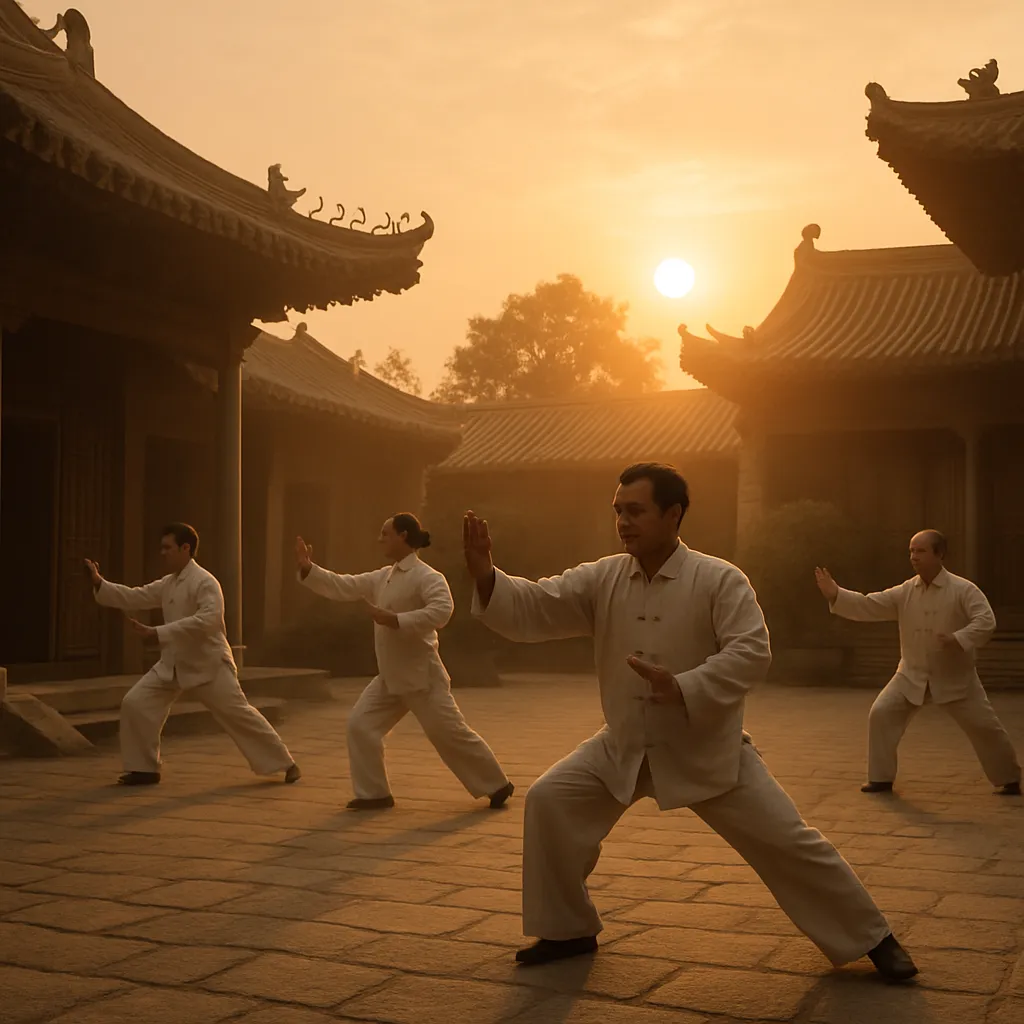
Tai Chi Chuan grew out of the village traditions of northern China and the broader Taoist culture of self-cultivation. Its recorded history is shorter than legend suggests, but rich enough.
From Chen village to the world
The earliest clearly documented Tai Chi lineage is the Chen family of Chenjiagou in Henan province, whose art combined martial technique with the breathing and silk-reeling movements characteristic of the internal approach. In the nineteenth century Yang Luchan learned the Chen art and later taught a modified form in Beijing; from his teaching the widely practised Yang style developed, and from these in turn came the Wu, Wu/Hao and Sun styles.
Health and the modern form
During the twentieth century simplified forms were created to make the art accessible to large numbers of people, and Tai Chi spread worldwide as a practice for health and longevity. Today both the older, fully martial forms and the gentler health forms are taught side by side.
The classics
Underlying every style is a small body of writing known as the Tai Chi Classics, which describe principles rather than techniques: rooting, yielding, using the waist, distinguishing full and empty. These ideas connect the art to the wider Qigong and Taoist traditions and remain the surest guide to practice.